The Clock That Stopped and Other Things Worth Asking About
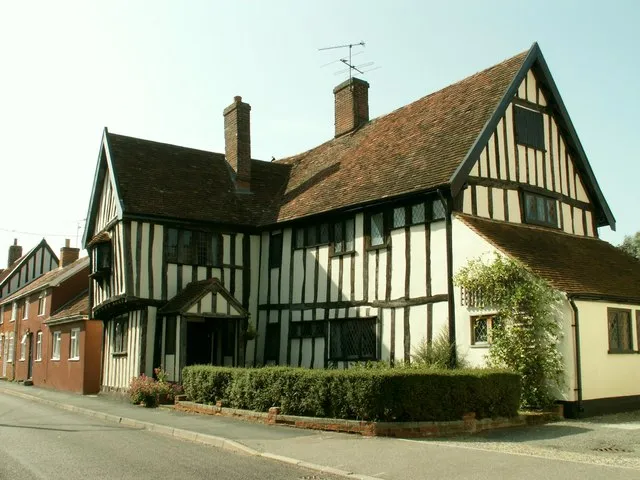
Photo: Robert Edwards, CC BY-SA 2.0, via Wikimedia Commons
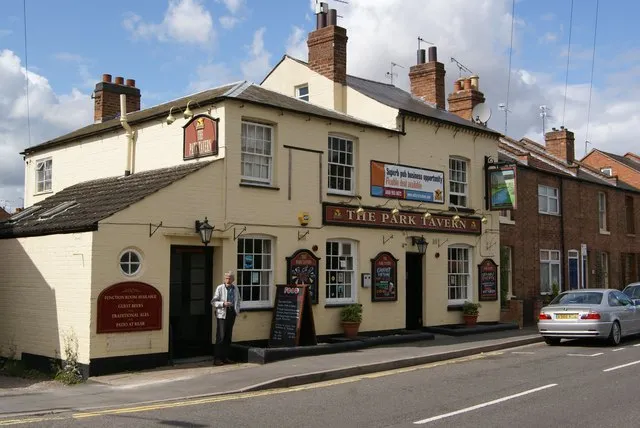
Walk into The Leopard on a quiet Tuesday afternoon and you'll notice the polish before anything else. That's the walls. They've had a lot of attention over the years, one way and another, and they've collected a fair amount in return.
Every pub of a certain age ends up an accidental museum. Nobody sets out to build a collection. Things simply arrive. A photograph gets handed over in an envelope with no explanation. A sign comes down off a wall somewhere and needs a home. Someone passes on, and their daughter brings in a trophy because it belongs where they drank, not in a box under a bed in Tunstall.
We've got our share of it. And while nobody is pretending this is the Potteries Museum, there's a decent case to be made that a pub remembers a town in a way a glass case never quite manages — because the people doing the remembering are sat underneath the exhibits, pint in hand, happily arguing about the details.
The clock that stopped at ten past nine
There's a brass clock above the door that hasn't ticked in living memory. Ten past nine, permanently. New regulars ask about it roughly once a fortnight and get a different answer every time, which is one of the pleasures of the thing.
Derek, who has been drinking here since the early seventies and doesn't mind being quoted, dates it to the winter of the three-day week. His version goes that the clock came out of a shop on the square when the owner retired, and that the family gave it to the pub because the old man had taken his dinner here every working day for thirty years. Whether it stopped before or after the move depends entirely on who is telling it.
What is agreed is that nobody has ever had it repaired. There was talk of it once, and then the talk died, and now the stopped clock is simply part of the furniture. Margaret, who has been coming in for over forty years, puts it best: a working clock would only ever tell you the time. This one tells you how long people have been sitting here arguing about it.
The tile that came home
Framed on the side wall, cracked clean across the middle, is a blue-and-white transfer tile. It's not valuable. It's not even especially old in the scheme of things — the works that made it closed in the eighties, and the tile was rescued from a skip at the back of the building on the day the gates shut for good.
What makes it worth a frame is the border. Margaret's mother painted it. Not the pattern itself, which was done by the hundred, but the little brushwork round the edge, which was done by hand and by her, on a Thursday, on piecework, in a building that is now flats with a nice view of the bypass.
She brought it in one Christmas in a carrier bag, said 'that wants putting up somewhere', and went back to her seat. It's been up ever since. If you ask her about it she'll tell you it's nothing special, and then she'll tell you about it for twenty minutes.
A photograph with no names on the back
Behind the bar there's a black-and-white photograph of a crowd outside the front of the pub, bunting strung across the windows, everybody in a hat. No date. No names. Somebody has written 'the street' on the back in pencil and that's the extent of the archive work.
The regulars have been dating it for years. The strongest argument is 1953, on the grounds of a particular hat worn by a woman third from the left. The counter-argument is that half the street turned out for anything with bunting in those days, and that a hat is not evidence. Neither camp has ever given an inch, and both of them are probably enjoying it too much to want the question settled.
It's the best kind of pub object, that photograph. It's not about the people in it. It's about the fact that everyone standing in front of it now has an opinion.
The list of landlords
Framed by the door is a hand-lettered list of licensees going back to the nineteenth century, compiled by a regular who spent a fortnight of his retirement in the county archives and came out with a cricked neck and a newfound respect for census returns.
It's not perfect. There are two gaps and at least one name that's a best guess rather than a fact, and he'd be the first to admit it. But it does something a history book can't: it puts the pub's memory in a line, so that the person pulling your pint is standing in a queue that stretches back past the war, past the works outings, past everybody in the photograph with the bunting.
The bell that gets rung once a year
There's a brass handbell on the shelf that is not for last orders and never has been. It gets rung once a year, on New Year's Eve, by whoever happens to be standing closest to it at the right moment, which is a tradition with no committee, no rules and no fixed time.
Ask where it came from and you'll be told it came from a pub two streets away that closed before most of us were born, and then someone will correct that, and then someone else will correct the correction. This is how local history actually works. It's less an archive than a long-running argument with beer in it.
The drawer of things
Behind the counter there's a drawer that isn't really a drawer any more so much as a holding pen. A ration book. A darts trophy from a league that no longer exists. A photograph of a barmaid from the sixties that nobody can identify but nobody wants to throw away. A brass token from a brewery that got swallowed up decades ago.
People bring things in because a pub feels like the right place for them. Not to a museum, where they'd be catalogued and lit properly and never touched again, but here, where they'll be picked up, squinted at, misidentified and argued over.
Why the walls matter
None of this is here because it's worth anything. It's here because it was given, or rescued, or inherited, and because a town's memory is mostly kept in small unofficial places by people who don't think of themselves as keeping anything at all.
So next time you're in, don't just look at the bar. Look up. Ask about the clock. You'll get an answer, and then you'll get a better one from somebody at the next table, and by closing time you'll have three versions and a strong preference for the least likely.
That's not a museum. That's better.