The Lunch Bell Before the Kick-Off Bell: Matchday Rhythms at The Leopard

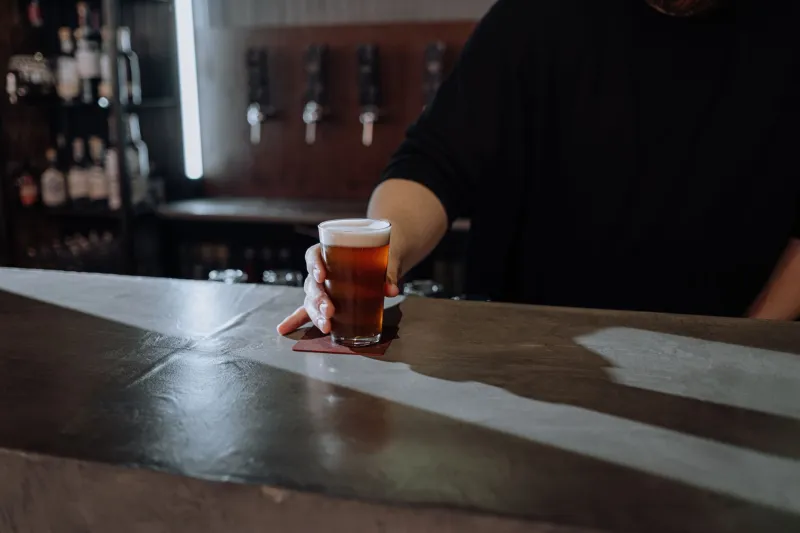
Photo by Photo by Matt Benson on Unsplash on Unsplash
A home matchday in Burslem does not arrive all at once. It filters in. First comes the couple who have deliberately caught the earlier bus from Hanley, because they would rather sit with a pot of tea for twenty minutes than stand in a queue for ten. Then the pair in Vale scarves who order before their coats are off. Then the chap on his own who reads the chalkboard as if it might contain team news. By half past twelve, The Leopard has stopped being an ordinary pub lunch and has become a halfway house between bus stop and turnstile.
That is the thing about matchday lunch here. It is not a ceremony. It is a relay. The kitchen is not trying to create a dining experience; it is trying to get good, hot, filling food into people who have one eye on the clock and one ear on the crowd outside. Vale Park has sat up the road since 1950, and the town has had decades to learn how this works. A pub does not invent matchday rhythm. It listens to it.
The First Orders
The first orders are always practical. Pie and peas. A cob. Chips. Soup if the wind has come down from the hill with intent. Nobody studies the menu for five minutes on a matchday. They study it for about eight seconds, then ask whether the pie is hot and whether the chips are quick. Fair questions, both.
A Saturday kick-off at three means lunch has to land around one. A midweek game at quarter to eight means an early tea, or a plate of something before the evening properly begins. The kitchen knows the difference. It also knows that a matchday menu is a promise about time. If the board says quick, it has to be quick. There is no point offering a slow-braised anything to a man who needs to be through the turnstile by twenty to three.
So the card gets shorter. Not because the kitchen has run out of ideas, but because a pub kitchen has a finite number of hobs, a finite amount of oven space and a very finite amount of patience when someone orders the most complicated thing on the board at ten to two. On matchdays, simple food is not a compromise. It is the whole point.
A Short Card, Deliberately
The best matchday lunch is the one that leaves you with room for a pint and no need to sprint. That rules out anything requiring architecture. No towers. No baskets with three separate dipping pots. No burger that needs to be approached from a specific angle. A pie, a spoonful of peas, a splash of gravy if you are that way inclined. A cob with proper ham and a bit of mustard. Chips that have not been kept waiting under a lamp since eleven o'clock.
Staffordshire fare suits this better than most. Oatcakes, when they are on, are made for eating with one hand and a folded newspaper in the other. Lobby is a bowl of warmth in a town that knows a thing or two about cold evenings. A decent pork pie does not need a garnish or a speech. It needs a pint beside it and somewhere to put your scarf.
There is a temptation, when football is in town, to make everything feel like an event. The Leopard does not bother with that. A matchday menu should be plain enough to trust and quick enough to forgive. If an away supporter comes in, they get the same welcome and the same short card. That is not a lack of ambition. It is knowing what the day actually asks for.
The Regulars' Timetable
Regulars have their own timetables, and they are more reliable than any fixture list. The table near the window belongs to two brothers who split a pie and argue about the team selection in voices that carry exactly as far as they need to. The man by the bar always orders a half with his food and then a pint after, as if he is pacing himself for a match he has already seen a hundred times in his head. Someone always checks their phone for team news. Someone else always tells them not to bother until after they have eaten.
The pub fills in waves. Half twelve is quiet enough to hear the kitchen fan. One o'clock brings a hum. By half past one there is the particular sound of a room where people are eating faster than they would normally choose to. Cutlery down, coats on, last sip, out. The kitchen can read the room by that sound alone. It is not panic. It is just a town on a schedule.
And then, at about twenty to three, the room goes quiet in a different way. Not empty — never quite empty — but thinner. A few stay behind with a coffee and the crossword. The staff clear plates and reset. The lunch service has done its job. The day has moved on to the whistle.
When It Is Not Matchday
It would be easy to write about matchday as if it were the only day The Leopard has. It is not. A Tuesday lunchtime has its own rhythm, and it is a gentler one. The same tables are there, but nobody is eating against the clock. The pie might still be on, but the pace is different. The regulars who could not tell you who Vale are playing on Saturday still come in for a sandwich and a chat. The pub belongs to them too.
A football crowd is a weather system, not a climate. It arrives, it fills the room, it moves on. The Leopard does not need to pretend every day is matchday. It just needs to know what to do when one arrives. That means keeping the kitchen sensible, the bar staff calm and the welcome the same whether you are wearing a scarf or not.
The Last Pint Before the Whistle
There is always one. Someone who has finished their food, checked the time, and decided that there is just enough room for a quick pint before the walk to the ground. The bar staff know the look. They also know the difference between a pint that can be drunk comfortably and a pint that will be abandoned on a windowsill. A pint poured at twenty to three is a contract. It needs to be respected on both sides.
By five to three, the last of the matchday crowd has gone. The glasses are cleared. The kitchen starts to think about the evening. The Leopard settles back into itself, a pub again rather than a staging post. The football will bring them back afterwards, some of them, depending on the score and the weather and whether anyone can face the walk back up the hill. But the lunch service is over.
Matchday lunch is not really about the pie, though the pie helps. It is about timing. It is about a pub knowing that it sits between the bus stop and the turnstile, and that the food it serves has to be quick enough to be useful and good enough to be worth the stop. The Leopard does not need every day to be matchday. It just knows what to do when one arrives.