The Corkboard Chronicle: Forty Sheets of A4 and the Whole of Burslem
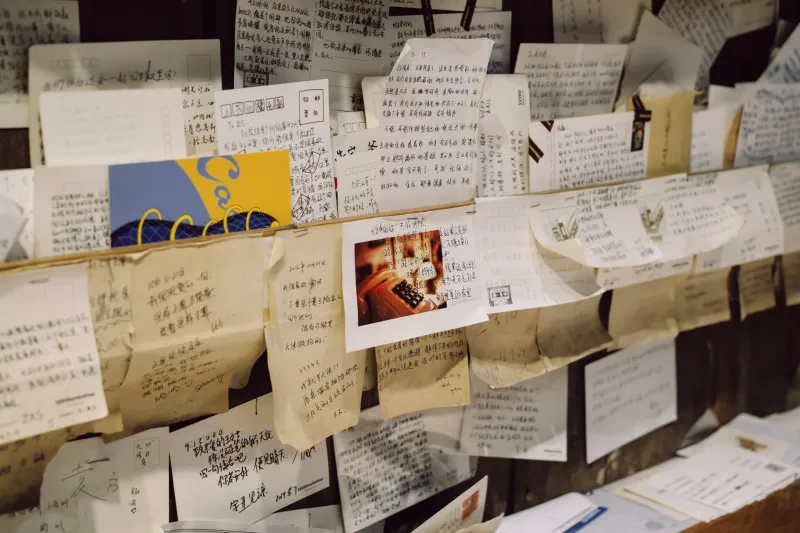
There's a board to the left of the door as you come in — cork the colour of stewed tea, a frame painted the same tired green as the window sill, and something in the region of forty bits of paper pinned to it in varying states of surrender. Some are straight. Most are not. A few have hung there so long the corners have furred over and the biro has faded to the colour of weak gravy.
You'll have walked past it a hundred times. Everyone does. It's the last thing you look at on the way to the bar and the first thing you look at on the way out, and in between it quietly gets on with being the most honest noticeboard in the town.
The Layering Problem
Nobody has ever taken the whole board down and started again. That's not how it works. Notes go up in the top left if they're urgent, get shifted along as newer ones arrive, and eventually settle into the bottom right like silt. The oldest thing currently on there is a laminated card advertising a charity quiz in aid of a church roof fund, which was held on a date that has since been rained on, snowed on and forgotten. The roof fund itself is long since sorted. The card remains. Nobody has the heart.
What you get, then, is a stratigraphy. Read it from top to bottom and you get this week. Read it from right to left and you get about eighteen months of Burslem asking itself small favours.
Biscuit, and the Economy of Lost Cats
In the middle, at eye height, is Biscuit. Tortoiseshell, seven years old, last seen near Hot Lane on the second of November, "answers to her name but only if she can be bothered". The photo is a photocopy of a photocopy, and Biscuit looks like a smudge with opinions.
What's interesting isn't the poster. It's the strip of paper taped underneath, added later in a different hand: "Sighted on Hamil Road, bonfire night, ran off towards the park." Under that, in pencil, someone else: "Think we saw her by the allotments Sunday." Under that, a mobile number, then a second mobile number, then a note saying the first number was wrong.
It's a comment thread. Slower than the internet, kinder, and it doesn't ask you to like anything. It just asks you to look out of your window.
The Quiet Notes
Some of the paper on that board is cheerful — choir practice at the Methodist hall, Tuesdays at half seven, new voices welcome, no audition, tea provided. A yoga class in the church annexe. A tabletop sale. Somebody's grandson doing a sponsored walk in a superhero costume, which is either brave or mad in November.
And then there are the other ones. A plain white card, neat handwriting, no decoration at all: "Tea after the service at The Leopard, Thursday, 3pm. All welcome. Family would be glad of company."
That one will stay up for a fortnight and then come down quietly, and nobody will mention it, and that's exactly right. But it tells you something about a town — that when the worst thing happens, the notice goes up in the pub as well as the church, because the pub is where the people who don't go to church will see it.
Rules Nobody Wrote Down
There's an etiquette to the board, and it's strictly enforced by Sam behind the bar, who keeps a small tub of drawing pins and a larger tub of blue tack following an incident involving a balloon and a funeral notice that we don't talk about.
Ask before you pin. Nothing political. Nothing selling anything, unless it's a charity or a kid's football team raffle. Don't cover the choir. Don't cover Biscuit. The top left corner is reserved for the Christmas fair from the middle of November onwards and everyone simply knows this, the way you know which side of the pavement to walk on.
Nobody has ever seen these rules written down. They hold anyway.
Why It Still Works in 2026
We all carry a group chat in our pocket. Burslem has its Facebook groups, its WhatsApp threads, its three different pages for the same neighbourhood argument. So why does a sheet of A4 and a thumbtack still do the job?
Because the board doesn't need you to have an account. Because the woman who cleans at the church doesn't do social media and doesn't need to. Because a notice in a doorway is seen by people who weren't looking for it — the fella on his way to the match, the couple in for a Sunday lunch, the lad waiting for a bus that isn't coming. There's no algorithm here. Nothing is being recommended to you. It's just there, in the order it arrived, and you can take it or leave it.
And because paper is stubborn. A post gets buried by teatime. A poster on a corkboard stays put until somebody with a pin decides otherwise.
The Ones That Never Come Down
Down in the bottom right, behind a flyer for a gig at the vaults and a card for a gardener who does hedges and "small jobs, no job too small", there's a thank-you note from a family whose name nobody now remembers, thanking the pub for a wake done properly. And there's a flyer for a band called The Cobridge Four, who played upstairs on a Saturday in a year beginning with two, and who split up before the flyer had curled.
They stay because taking them down would feel like tidying away the town's own memory. The board is not a noticeboard, really. It's an archive that happens to be updated daily.
Next time you're in, have a read. Then pin something of your own — a spare raffle ticket, a request, a small piece of news. There's room in the middle. There always is.