Six O'Clock Silence, Seven O'Clock Chalk: A Morning in the Leopard's Back Rooms
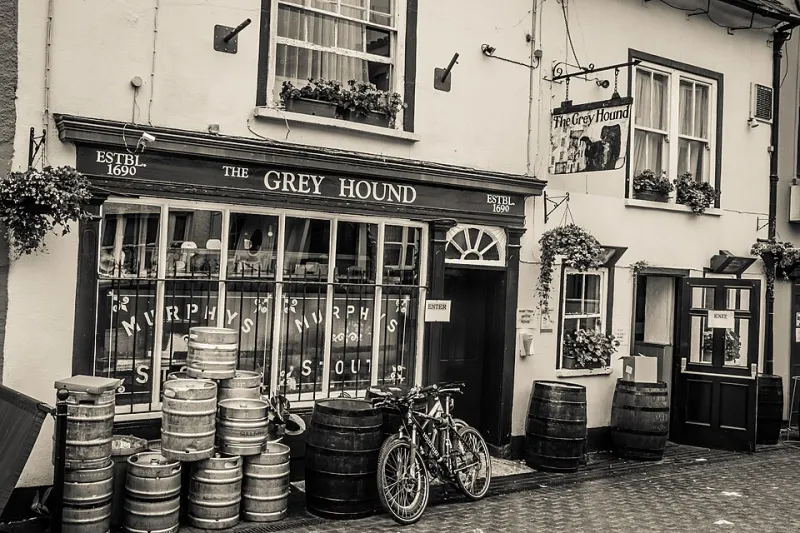
Photo: Dieglop, CC BY-SA 4.0, via Wikimedia Commons
There is a version of a pub that most people never meet. It exists between about half six and eleven in the morning, when the lights are half on, the chairs are still upside down on the tables and the only noise is a delivery driver reversing badly and a radio nobody has bothered to retune since it was last tuned badly.
Come in through the side door on a Tuesday in November and you'll find The Leopard mid-yawn. Still warm from the night before, still smelling faintly of yesterday's ale and the polish that goes on the bar top at closing. Give it an hour and it'll be a pub again. For now it's a building with a job to do.
The van that arrives before the street wakes
The first knock at the back is usually the veg. It's not a glamorous arrival — no fanfare, no crates of anything photogenic, just a driver who knows the gate sticks and a clipboard that has to be signed by someone who can find a pen.
What comes in gets sorted on the long table by the kitchen door, and this is where the day's menu actually begins, not in a spreadsheet three weeks ago. A box of leeks that are better than expected. A bag of potatoes that are worse. A tray of something the cook will look at for a long moment before deciding it's a soup day, or a pie day, or a 'put it in a cob and say nothing' day. Menus get written in pencil here for a reason, and it isn't laziness.
Everything gets checked against the order, because a pub that gets its delivery wrong doesn't discover it in a polite email. It discovers it at twenty past seven in the evening, with a full room and an empty shelf.
Down the cellar steps, where the pub is really built
If the kitchen is the pub's stomach, the cellar is its conscience. Cold, dim, and smelling of damp stone and malt, it's the room nobody photographs and everything depends on.
Cask ale doesn't rush and won't be hurried. Firkins come in and want settling — a couple of days minimum, longer if the journey's been unkind. The cellarman tilts each one, vents it, checks the temperature the way other people check their phone, and taps it only when it's ready to be tapped. Get impatient down here and the result isn't a disaster, exactly. It's just a pint that's nearly right, which is a worse thing to serve in a town that knows the difference.
Lines get cleaned on a rota, and it is precisely as interesting to watch as it sounds. It is also the single most important job in the building. Nobody has ever ordered a pint because the lines were clean. Plenty of people have walked out because they weren't.
There's a clipboard on a nail down there with dates and initials on it, and it is treated with more seriousness than most legal documents.
Knives, cloths and the politics of the veg box
Upstairs, the cook has the radio on and a stockpot going, and is having the same argument with the same fridge that has been had every morning since the fridge arrived. The prep list is short and handwritten: onions, a bit of braising, something for the veggie option that isn't an afterthought, and a batch of something for the bar that can be eaten with one hand while the other holds a pint.
Staffordshire doesn't ask much of a pub kitchen, but it does ask that the food taste like it was made by someone who lives here. Oatcakes on the menu, a proper lobby when the weather turns, cobs that are assembled rather than designed. Nobody in Burslem has ever wanted a drizzle.
Meanwhile, out front, there's a bucket of hot water, a cloth and a woman who has cleaned this room several thousand times and could find a sticky patch in the dark. Glasses get polished and held up to the light. Tables get wiped underneath as well as on top, which is the difference between a tidy pub and a clean one. The bar top gets its coat of polish, and the whole room starts to smell like the promise of something.
The chalkboard gets done last. That's deliberate. You write the ale list once the cellar's had its say, not before.
The half hour nobody sees
By ten, the pub is nearly ready and completely empty, and this is the strangest part of the day. Everything is in place — glasses, crisps, the good seat by the fire, the fire itself if it's cold enough — and none of it has been earned yet. It's all anticipation and no audience.
This is when the small conversations happen. The ones that don't fit in service. Who's coming in later. Whose dog died. Which regular hasn't been seen for a fortnight and might want a ring. A landlord who doesn't know that sort of thing is just a person selling drinks; a landlord who does is running a pub.
Someone will put the bins out. Someone will remember the light in the back room flickers. Someone will move a chair two inches and decide it's better there. It is a raft of tiny, unremarkable decisions, and by opening time they'll have become invisible again.
Then someone knocks, and the quiet goes back where it came from
At eleven, the door goes. Usually it's a regular who's been walking past for twenty minutes waiting for a respectable hour to try the handle, and who will claim to have been 'just passing'.
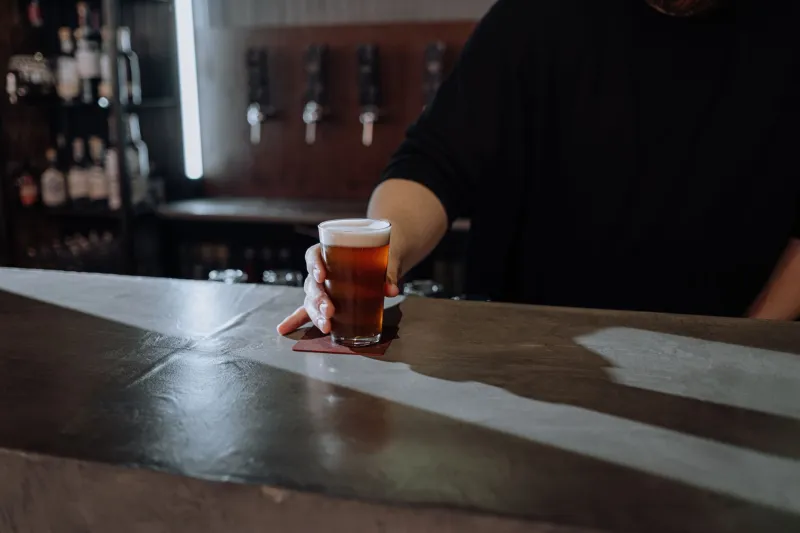
The lights come up fully. The chalkboard's written. The first pint gets pulled with a bit of care and a bit of theatre, and it will taste, roughly, like the morning was worth it.
Nobody thanks the veg van. Nobody thanks the clipboard on the cellar wall. That's the job — to make all of it look like it simply happened, so that the only thing a customer has to think about is whether they want a second one.
They nearly always want a second one. That's the review that counts.