Market First, Menu Second: How The Leopard Builds a Burslem Christmas Dinner
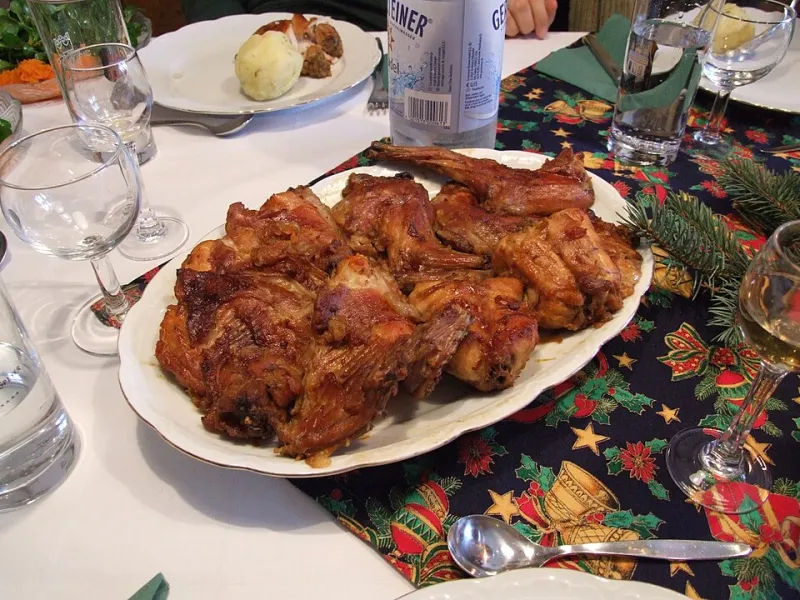
Photo: Claus Ableiter, CC BY-SA 3.0, via Wikimedia Commons
Christmas dinner has a reputation for being complicated. It isn't, really. It's a roast with extra expectations. The complication comes from trying to do too much, buying too far from home and treating the whole thing like a test you can fail. At The Leopard, the festive menu starts with a simpler idea: buy well, buy close and cook it like you mean it.
For Christmas 2026, that planning began at Burslem market, not in front of a spreadsheet. A walk round the stalls, a chat with the butcher, a look at what the veg is actually like this week. That's not romance. It's practicality. A menu built on what's good and available is a menu that tastes better and wastes less.
The Stall Before the Spreadsheet
The first draft of a Christmas menu is never a list of dishes. It's a list of questions. What's the beef like? Are the sprouts tight and small or big and leafy? Is there a local cheese that would do for the board? Does anyone make a pudding worth serving, or are we better off doing our own?
Burslem market answers most of those questions in an hour. You see the produce, you talk to the people who sell it, you find out what's coming next week. That's a different kind of planning to clicking through a wholesaler's catalogue. It keeps the menu honest. If the parsnips are good, you use parsnips. If the sprouts are better than expected, you put them somewhere they'll be noticed. If the cheese stall has something new, you build the board around it.
What Local Actually Means on a Plate
Local is one of those words that gets used until it means nothing. On a pub menu, it should mean something you can trace. Not just a flag on a spreadsheet, but a relationship. The butcher who knows how you want the beef hung. The greengrocer who'll tell you not to bother with the first crop of something and wait a week. The baker who understands that a Christmas menu needs bread that can stand up to gravy.
At The Leopard, local doesn't mean every single ingredient comes from within a five-mile radius. It means the important stuff does. The meat, the veg, the cheese, the bread. It means the menu is built around what Burslem and the surrounding area does well, rather than what's cheapest to ship in. That's not a gimmick. It's a way of keeping the food connected to the place it's served in.
The Kitchen's Christmas List
Once the market has done its job, the kitchen takes over. The list is shorter than you'd think. A good bird or a proper joint of beef. Potatoes that will roast rather than steam. Sprouts that will take a bit of char. Carrots with some sweetness. Parsnips, because it's Christmas. Onions, celery, herbs for the stuffing. Bread for crumbs. Butter, plenty of it. And a pudding that doesn't need a fanfare.
The cooking is classic because classic works. You don't need a dozen processes on the plate. You need good stock, proper seasoning, a hot oven and someone who knows when to take the meat out. The festive menu isn't the place for experiments that might go wrong on a busy Saturday. It's the place for doing the familiar things well.
Sprouts, Stuffing and the Case for Not Overthinking
Sprouts get a bad reputation because they're often cooked badly. Boiled to a khaki mush, they deserve the criticism. Shredded and fried with butter and a bit of bacon, or roasted until the edges catch, they're a different vegetable altogether. The same goes for stuffing. You don't need a dozen ingredients. You need good sausage meat, herbs, onion and breadcrumbs, and enough stock to keep it moist.
The argument for keeping Christmas dinner local isn't about being precious. It's about reducing the number of things that can go wrong. Short supply chains mean fresher food. Fresher food means less seasoning needed, less waste, less anxiety. And a menu built around what's in season and nearby is naturally simpler. That's not hard work. That's the opposite.
The Pudding Problem
Christmas pudding divides people. Some love it, some tolerate it, some would rather have a pint and a biscuit. The Leopard's approach is to offer something that feels festive without forcing anyone into a tradition they don't want. A proper pudding, yes, but also a lighter option for the person who's already full. The point of a festive menu is that everyone at the table finds something they're glad they ordered.
That's where local suppliers earn their keep again. A good pudding maker, a decent cheese, a bit of something chocolatey. You don't need to make everything from scratch to keep it honest. You need to know where it came from and why it's on the menu.
A Menu That Leaves Room for a Pint
The final test of a Christmas menu is whether it leaves you able to enjoy the rest of the day. A plate that's too heavy, too rich or too clever can flatten the evening. A good festive dinner should send you back to the bar for another pint, not to the car for a nap.
That's why The Leopard's Christmas menu is built around balance. Rich meat, sharp sides, a pudding that's worth it but not overwhelming. And a drinks list that knows a dark ale can be just as festive as a glass of something sparkling. Christmas starts at the market stall, but it ends at the table, with a pint in hand and a plate that tastes like Burslem.